Tag Archive | "preppers"

Tags: , , , , , , , , , , , , , , , , , , , , ,

The Narrowing Gap in the Prepper vs Survivalist Mentality

Posted on 27 January 2012 by Survivalist

I was just having a conversation with a friend yesterday about the dichotomy of thought in survivalism. Particularly, the “prepper vs. survivalist” mentality.

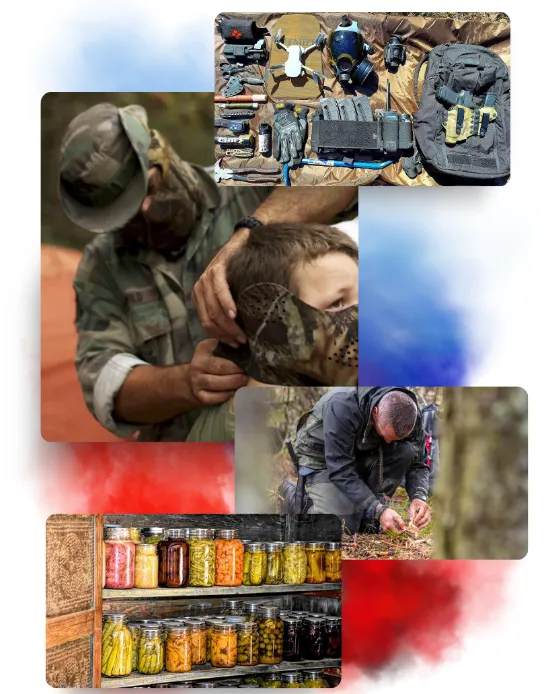
For some time, people who considered themselves “preppers” would concentrate mostly on food and water storage, gardening, and fortifying and equipping their home to “shelter in-place” in the event of an emergency, grid failure or some other calamitous event. Maybe they would also own firearms and have a bug-out bag in their house or car, but they still clung to the notion that if something disastrous happened, they were staying put. Or if they were forced to leave their home, surely they’d be able to come back after the dust settles (after say… 72 hours or so?), and the importance of learning wilderness survival or bushcraft skills rarely entered the picture.

I’ve spoken to many self-proclaimed “preppers” who adamantly rejected the title of “survivalist”. Some due to the negative perception of what a survivalist is, while for others, it was a statement of honesty – in other words; they really didn’t know the first thing about surviving in the wilderness (and weren’t really too keen on learning).

Conversely, there is a paradigm among some who describe themselves as “survivalists” who concentrate more on bushcraft skills and outdoor survival gear than on long-term food and water storage and other “prepping” concerns, as their plan is to “head for the hills” when disaster strikes and “live off the land” when the SHTF.

These two schools of thought occupy the far extremes of the spectrum and there’s a fallacy in both ways of thinking.

Making the assumption that no matter what happens, you’ll always be able to stay in your home is unrealistic. If your home is destroyed in a disaster (with your food storage and all your preps with it), or it simply becomes unsafe to stay where you are, you’ll be lost without the knowledge, skills and gear that’s required to survive in a more austere environment. You also can’t assume that your 72-hour bug out bag is all that you’ll ever need. If you’re forced to leave your home, chances are pretty good that you won’t have anything to come back to after 3 days.

If your plan is to beat a hasty retreat to the wilderness at the first sign of trouble thinking you can simply hunt and forage for your sustenance, you’ll be in for some unpleasant surprises as well. Most chiefly of which is that surviving in the wilderness is a lot harder than most people think. This isn’t going to be like a camping trip or an outing with your buddies, or an episode of your favorite survival show. It’s going to be arduous and long-term… Day-in and day-out, without rest for the foreseeable future. Even those of us who are experienced outdoorsmen and hunters would have a rough go of it.

There’s nothing simple or easy about hunting for your survival. The critters aren’t going to just come right out and let you shoot them just because you need the food. It takes a lot of energy and you will fail more often than not. Furthermore, you won’t be the only one out there with the same idea, and it won’t take long before whatever wild game is out there is depleted. Not to mention the added danger of being accidentally shot or injured by other survivalist hunters and the territorial conflicts that are sure to arise when someone (or a group of someones) gets the notion that you’re encroaching on their territory.

So if you’re subscribing to the romantic notion of the self-sufficient survivalist, living in the wilderness, you might want to develop some other options to pursue before it comes to that. Such as setting up a well-stocked wilderness retreat, making plans to go to stay with friends or relatives who lives out of state or at least out of the immediate danger zone (with a few different escape routes), as well as stocking and prepping your home, in the event that you will be able to stay put. Just because you are capable and have the know-how to survive in the wilderness, doesn’t mean that it should be your resort of first choice.

Fortunately, it’s been my observation over the last year or so that there’s a greater overlap between preppers and survivalists and the line between the two schools of thought has gotten a lot blurrier.

I would say that most “survivalists” these days are also “preppers”, but I don’t see as many preppers learning wilderness survival and bushcraft skills.

The truth is; you really need to be well-rounded in both areas. That’s why I recommend that all preppers get some kind of bushcraft training, if they’re not experienced at surviving in the wild. There are bushcraft classes and schools in just about every state these days, and you’re sure to find something going on in a county or town near where you live if you look for it.

Many bushcraft skills will also come in handy even if you don’t end up having to bug out into the wild. You don’t have to invest in a lot of fancy or expensive gear, either. In fact, you’ll learn a lot about improvising tools and getting things done with what you have at your disposal. There’s an old expression in survivalism: “The more you know, the less you need to carry”. Those who are experienced in the wilderness know exactly what that means.

We have lost so many of the skills and knowledge for being self reliant in our own natural environment over a relatively short period of time. For about 200,000 years, (not counting Neanderthal and Cro-Magnon) modern humans knew how to live and survive in the natural world, but since the industrial revolution, with all the comforts and conveniences it brought us, we as a species have abandoned all that. What percentage of people today know how to start a fire without matches or make improvised tools, or even hunt and dress game? How many people do you think knew those things 100 or 150 years ago?

I think a lot of the problems we have in this world stem directly from a sense of separation from our environment. We look at the natural world and wilderness as being “out there”, like it’s some other world that we don’t belong to. We feel more at ease in the artificial world that we’ve built for ourselves, and that just ain’t right.

So go out and learn some wilderness skills! You’re gonna need ‘em for TEOTWAWKI, no matter what your particular “plan” is.

To read more about why you should take a bushcraft course, CLICK HERE.

Comments (0)

Tags: , , , , , , , , , , , , , , , , , , , ,

Statistics Show a Growing Increase in Prepper Awareness

Posted on 24 January 2012 by Survivalist

I’ve been getting the sense that there has been a steady increase in the number of people getting involved in preparedness and survivalism over the last couple of years, but so far, that has just been based on personal observation and dead reckoning. There is now a growing number of economic indicators over the past few months that show Americans are joining in the prepper movement as concerns over a global economic collapse increase.

Besides the catastrophe that has been developing in the EU, with the failures of economies in Greece, Italy, Spain and Ireland over their massive debt issues, a new agreement yesterday between India and Iran over the trade of gold for oil (instead of U.S. dollars) is causing even greater concerns. Already last year, China and Russia agreed to stop using the dollar for trade between those two countries, starting a new paradigm shift away from the dollar as the global medium of exchange. As these agreements increase, the chances of a dollar collapse, or outright rejection of US control over the reserve currency also increases.

The FBI has reported a record number of background checks for gun purchases over the Christmas season and sales of survival and disaster preparedness gear were top items bought by Americans during the holidays. Also, as I posted last Friday, economist and trends forecaster Gerald Celente listed economic martial law by the government as the number one concern on his list of trends for 2012.

People living in rural areas who are more self-sufficient tend to be more aware of the need for long-term preparedness than those living in cities and urban environments. Self-Reliance has been replaced by reliance on the government in America. A new report that came out yesterday shows that 15% of the U.S. GDP is now being spent on welfare programs to almost 50% of the American people!

The single most disturbing statistic: in 2011 nearly half of the population lived in a household that receives some form of government benefit, which in turn accounted for 65% of total federal spending, or $2.5 trillion, and amount to 15% of GDP.

                                                                                                                                                                                       -Zerohedge

And that’s just the way the oligarchy wants it.  People who are dependent on the gov’t for their day to day survival are easier to control and manipulate and they’re much less likely to see the dangers of a collapse.  While those who are self-reliant and don’t need gov’t handouts are much more aware of the sobering realities of the world around them and much more prepared to survive.

“Unfortunately, given the increasing complexity and fragility of our modern technological society, the chances of a societal collapse are increasing year after year,” said author James Wesley Rawles, whose Survival Blog is considered the guiding light of the prepper movement.

“We could see a cascade of higher interest rates, margin calls, stock market collapses, bank runs, currency revaluations, mass street protests, and riots,” he told Reuters. “The worst-case end result would be a Third World War, mass inflation, currency collapses, and long term power grid failures.”

                                                                                                                                                                                      – Reuters

Natural disasters, economic crisis and war can occur at any time, and are no longer limited to just a few regions around the world. The uprisings we saw in the Arab world last year showed us that governments can be toppled in just weeks or days. Our world is on the cusp of a global economic meltdown, or a new economic paradigm shift, and those who live a self-reliant life stand a much better chance of survival, and they are being joined by a growing number of preppers for any number of reasons.

Comments (0)

Tags: , , , , , , , , , , , , , , , , , , ,

Doom and Bloom Survival Medicine Handbook Now Available!

Posted on 23 January 2012 by Survivalist

Survivalist Magazine’s very own Dr. Bones and Nurse Amy (aka Joseph Alton M.D. and Amy Alton A.R.N.P.) announce the release of their much anticipated book; “The Doom and Bloom Survival Medicine Handbook”. Bones and Amy are well known for the invaluable medical information they impart in their regular “Collapse Medicine” section in Survivalist Magazine, as well their informative internet radio show: “The Doom and Bloom Hour” on the Preparedness Radio Network.

This book is over 400 pages of vital, no-nonsense medical information in easy to understand, step-by-step instruction, written in plain English, covering what you need to know to treat the injuries and medical issues you’re likely to face in a disaster, collapse or survival situation. You’ll also learn about conventional treatments, as well as “alternative” and natural remedies, with recommendations for medical supplies, equipment, medicines, home remedies and how to obtain them.

When all hell breaks loose and you can no longer count on first responders or emergency medical professionals to come to the rescue, it’s up to you to know what to do in the face of a medical emergency! I highly recommend you pick up The Doom and Bloom Survival Handbook and start gaining the knowledge to treat the illnesses and injuries that are sure to come when the SHTF.

CLICK HERE to check it out at Amazon.com


Comments (0)

Tags: , , , , , , , , , , , , , , , , , , , , , , , , , , , , , , , , ,

Video: Learn to Identify 23 Wild Edibles with Sergei Boutenko

Posted on 19 January 2012 by Survivalist

Yeah, I know it’s the middle of January and there ain’t any green wild edibles to be had up here in the north for a while, but when we’re in the deep, darkness of winter up here on the mountain, it cheers me up to let my mind drift to the spring and summer months ahead…

A lot of our readers are familiar with our good friend and wild edibles expert (and all-around swell guy); Sergei Boutenko. He wrote an article for Survivalist Magazine about wild edibles for our 3rd issue and he was one of the featured experts at our Survival & Preparedness Conference in Dallas last May.

For those who may not be familiar with Sergei, he has an amazing story of true survival that happened when he and his family were on a hike from Mexico to Canada on the Pacific Crest Trail. They miscalculated the amount of food they would need to be shipped ahead of them to various points along the trail and ended up running out of food. With little money and past the point of return, they put their knowledge of edible plants to good use, not only surviving but thriving by foraging wild plants all along the way!

Being of the typical carnivorous inclination, I would have never imagined that you could survive (especially in a physically rigorous situation) on wild plants alone, until I heard Sergei’s story. In fact, when people would ask me how a vegetarian could survive in the wilderness without eating meat, I would tell them that wild plants are fine as supplement, but your body needs all the oils, fats and protein – that can only come from meat – to maintain the levels of energy and strength that you need in a survival scenario.

Sergei has taught me a lot about wild edibles since then, and every now and then, I like to check out his website and his YouTube channel to see what new stuff he’s got going on. Today, I came across this 4-part series that teaches how to identify 23 different types of common, wild edible plants that are found almost anywhere. Watching the video lifted my spirits a bit and almost made it feel a little warmer up here at the mountain retreat (made me feel a little hungry too!), so I thought I’d share it with y’all.

By the time you’re done watching these videos, you’ll be able to identify a bunch of edible plants, no matter where you live.  Sergei also talks about the health benefits and other uses of the wild plants covered. And it’s not just good to be familiar with wild edibles for survival, but it can also help you save money on your grocery bill too!

Comments (0)

Tags: , , , , , , , , , , , , , , , , , , , , , , , , , , , , , , , , , , , , , , , , , , ,

Winter Clothing Survival Tips

Posted on 13 January 2012 by Survivalist

Well, for those of us in the northern parts of the country, we’re in the midst of the coldest time of the year. Especially up here in the mountains of northern New Hampshire, where, with the exception of a couple of isolated “nice” days (when the mercury crept up as high as 40ºF for a day), it’s been in the low to negative digits for several weeks now.

During the winter, most folks choose to spend almost all of their time indoors. But for the rest of us nuts, who choose to spend time in the outdoors in the cold of winter, (or those who are required to work outdoors) we face some very specific challenges and very real dangers.

Unlike in hot, human condition, the human body can do very little to adapt to a cold environment. Wind chill, wetness, heat loss through exposure and insufficient heat generation are all factors making it difficult to maintain a safe core temperature above 94ºF.

There are two critical factors involved in surviving in a cold environment. The first is generating heat through aerobic activity. Hypothermia can set in FAST and if you’re at rest in a cold environment a large amount of body heat is lost through convection (heat radiating out and away from your body). It is critical to keep your body generating heat through aerobic activity, while careful not to overheat.

Which brings us to our second factor: clothing. It can be compelling to overdress for a winter excursion outdoors, but vigorous activity, such as hiking can significantly raise your core temperature if the heat is not properly dissipated. Excessive overheating due to lack of thermoregulation will lead to profuse sweating, and rapid heat loss. In a winter survival situation, your problems get worse as your garments trap all that perspiration and become wet, further dropping in temperature.

It is important to know not only what to wear to survive outdoors in the cold, but also how much to wear and how to regulate the heat your body generates.

There are many different kinds of cold weather equipment and clothing. But don’t feel like you have run out and buy the newest, most expensive gear. Older gear will keep you warm as long as you apply a few cold weather principles. If you can afford the newer types of clothing that are available, then by all means use them. If not, then your clothing should be entirely wool, with the possible exception of a windbreaker.

Not only do you need to have enough climate-appropriate clothing to protect you from the cold, you also have to know how to maximize the warmth you get from it. For example, you should always keep your head covered. You will lose a large percentage of your body heat from an unprotected head. Furthermore, the brain is highly susceptible to cold and can stand the least amount of cooling. Because there is so much blood circulation in the head, most of which is on the surface, you can lose heat quickly if you do not cover your head.

Other areas of your body that you should keep protected are the neck, wrists, and ankles. These areas of the body have very little insulating fat, which make them good radiators of heat.

There are four basic keys to keep in mind in order to stay warm. An easy way to remember these basic principles is to use the word COLD as a mnemonic device :


  • C – Keep Your Clothing Clean

This principle is important in any climate for sanitation and comfort, but in winter, it is also important from the standpoint of warmth. Clothes matted with dirt and grease lose much of their insulation value. Heat can escape more easily from the body through the clothing’s crushed or filled up air pockets.

  • O – Avoid Overheating

When your body is too hot, you sweat and your clothing absorbs the moisture. This reduces your warmth in two ways: damp clothing is not an effective insulator, and as your sweat evaporates, it cools your body. You should always avoid sweating. If you feel yourself getting too hot, and starting to perspire, adjust your clothing so that you do not sweat. You can do this by partially opening your coat, or parka, or by removing an inner layer of clothing. You can also remove gloves, or mittens, or throw back your hood (if you’re wearing one) or switch to a lighter hat. The head and hands will efficiently dissipate excess body heat.

  • L – Wear Clothes in Loose Layers

Wearing clothes in loose-fitting layers will create air pockets that trap body heat, increasing its insulating value. Tight fitting clothing and boots restrict blood circulation and invite cold injury. Several layers of lightweight clothing are better than one equally thick layer of clothing, due to the dead-air space between layers. Also, you can remove or add clothing layers to regulate your body temperature, preventing excessive sweating or to increase warmth.

  • D – Keep Clothing Dry

This may seem like an obvious concern, but in cold temperatures, your inner layers of clothing can become wet from sweat and your outer layer, if not water repellent, can become wet from snow and frost melted by body heat. Whenever possible, wear water repellent outer clothing. It will shed most of the water collected from melting snow and frost. Before entering a heated shelter, brush off snow and frost. Despite the precautions you take, there will be times when you cannot keep from getting wet. At such times, drying your clothing may become a major problem. You can hang your damp mittens/gloves and socks outside your shelter during the day to dry. In freezing temperatures, the wind and sun will sometimes dry this clothing. You can also place damp socks or mittens, unfolded, near your body so that your body heat can dry them. In a campsite, hang damp clothing inside the shelter near the top, using drying lines or improvised racks. You may even be able to dry each item by holding it before an open fire. Dry leather items slowly. If no other means are available for drying your boots, put them between your sleeping bag shell and liner. Your body heat will help to dry the leather.

To read more about staying safe and surviving out in the cold CLICK HERE.


Comments (0)

Tags: , , , , , , , , , , , , , , , , , , , , , , , , , , , , ,

The Economic Collapse in Greece is Making Medicine Scarce

Posted on 12 January 2012 by Survivalist

This is what an economic collapse looks like, folks, and we ought to pay close attention because this is where we’re heading in the U.S.  All the things that you take for granted, such as medicine,  will no longer be available.  Pharmacies in Greece right now are faced with shortages of over half of the country’s most used medicines.  Many of them for the treatment of chronic and life-threatening ailments.  You’re hard pressed to even find Aspirin in Greece, let alone asthma medication, blood thinners, insulin, etc.  The insurance companies are refusing to step up (as all insurance companies do when it’s time to actually follow through and make good on their policies) and are making pharmacies and hospitals pay up front for their medications, with the promise of reimbursement. Public insurers already owe pharmacists some $422.1M for drugs bought last April, and it could take up to a year for pharmacists to get paid back.  Some pharmacies can no longer accept patient’s insurance and are asking them to pay up front.

Theodorakis said he already knows a few patients who can’t afford to pay and aren’t on treatment. If non-payment by public insurers continues, more will discontinue treatment, he said in an interview in his office in Athens, a few steps from where protesters lob Molotov cocktails and pelt police with rocks at Syntagma Square.”

Austerity measures that the Greek government have implemented to artificially lower the cost of pharmaceuticals have actually made the problem worse.  Now, suppliers are selling their products outside of the country, where they can sell their drugs at a higher price.

Novo Nordisk, based in Bagsvaerd, Denmark, is a case in point.

We are competing with our own products,” said Mike Rulis, a spokesman for the company.

Novo stopped selling some of its higher-priced insulins in Greece for about a month in 2010 after the government cut prices by about 25 percent.

In a way, you can’t blame them.  When the insurance companies play games with pharmacies and make them pay up front, and wait a year to get reimbursed, the pharmacists can’t pay the suppliers, and the suppliers can’t stay in business if they’re constantly taking IOUs.

At one point the government was advising people to purchase their medications directly from state hospitals, but hospitals aren’t in much better shape than the pharmacies are.  Hospitals are not in the business of selling drugs to the general public and they don’t have enough supply to meet the demand, so people end up having to turn to pharmacies anyway.  Furthermore, many hospitals now have to pay suppliers upon delivery.

This is why it’s a good idea to start stockpiling the pharmaceuticals that you rely on now, before the U.S. economy finally goes under.  Or better yet, learn how to treat chronic conditions and diseases with the natural, homeopathic analogs and wean yourself off of synthetic drugs altogether (under your doctor’s supervision, of course). Since many of the drugs that are on the market are based on natural compounds found in nature, chances are very good that you can find a natural path that’s just as effective as the often toxic chemicals the pharmaceutical industry peddles.
To read more about the Greek drug crisis, CLICK HERE.


Comments (0)


Survival & Preparedness News


Product Reviews, Featured Articles, Community Events, Videos & more. Everything to keep you in the know!

Advertise Here


Issue #1 REPRINT Offer!

Get the issue that started it all! We have REPRINTED a short run of the Premier Issue of Survivalist. Order your copy now! This limited time offer will not last long... Details >>

Issue #1 will not be printed again in a single issue format.

Kindle Owner? Get It Now on Kindle!


Get Survivalist on Kindle

View Survival Guides

Advertise Here

Survivalist Magazine Free Trial

Survivalist Magazine